Tanger-Tetouan-Al Hoceima
Chefchaouen
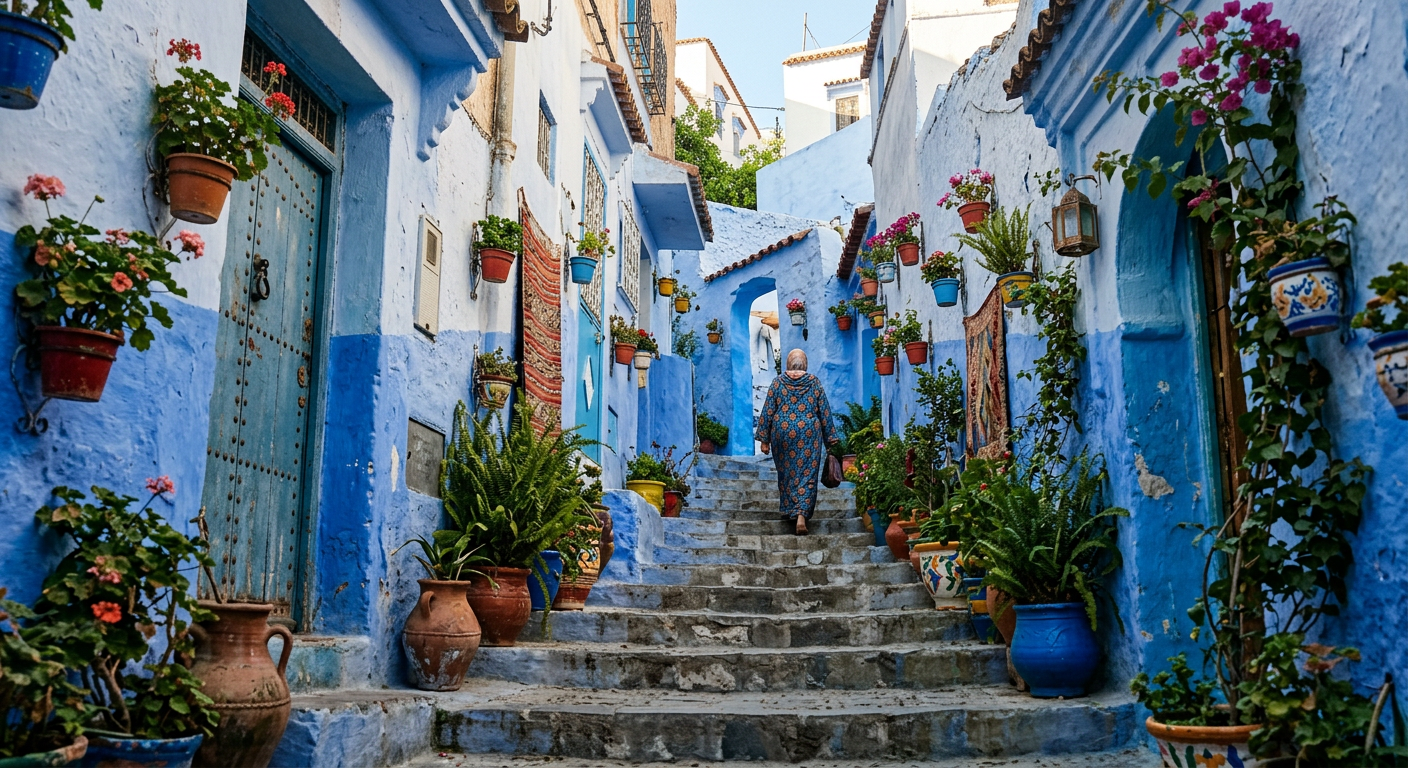
The blue pearl of the Rif mountains.
Chefchaouen at a glance
- Region
- Tanger-Tetouan-Al Hoceima
- Province or prefecture
- Chefchaouen (province)
- Status
- Province capital
- Population
- 42,786 (2014 census)
- Area
- Not available
- Elevation
- 600 m
- Coordinates
- 35.169, -5.264
- Postal code
- 91000
- Phone area code
- +212 539
- Time zone
- Africa/Casablanca (see note on Ramadan)
- Local names
- Chefchaouen (French) · شفشاون (Arabic)
- Best time to visit
- April to June and September to October
Population is from the 2014 census (HCP) and is being updated. Climate figures are indicative regional profiles. Confirm details with official sources before relying on them.
About Chefchaouen
Chefchaouen is a small mountain town known for its blue-washed lanes, handwoven textiles and walking trails in the Rif.
History
Founded in 1471 by Moulay Ali ben Rashid to resist Portuguese expansion, the town received Andalusian Muslim and Jewish refugees. Spain occupied it from 1920 to 1956.
Things to see in Chefchaouen
- Plaza Uta el-Hammam and the kasbah
- Spanish Mosque viewpoint
- Ras el-Maa waterfall
- Talassemtane National Park and Akchour
Climate and best time to visit
Mediterranean. Mediterranean climate with mild, wet winters and warm, dry summers. The north is the rainiest part of Morocco.
Best time to visit: April to June and September to October. Indicative regional profile.
Getting to Chefchaouen
- By air
- Tetouan Sania Ramel (TTU) is about 60 km away; Tangier Ibn Battouta (TNG) is about 110 km.
- By train
- There is no ONCF station; CTM and regional buses and grand taxis serve the town.
- By bus
- CTM, Supratours and regional bus companies serve most routes; grand taxis cover shorter hops. Check current schedules.
- By road
- Reached by national roads and, on many routes, the motorway network. Check road conditions in winter, especially in mountain areas.
Economy
Tourism, crafts and weaving, goat cheese and farming.
Food and drink
Local goat cheese, bissara soup and Rif specialties.
Festivals and events
Local cultural events; the town is quietest outside summer and holidays.
Where to stay
Options are mostly mid-range hotels and family-run guesthouses. In peak season and holidays it is wise to reserve in advance.